
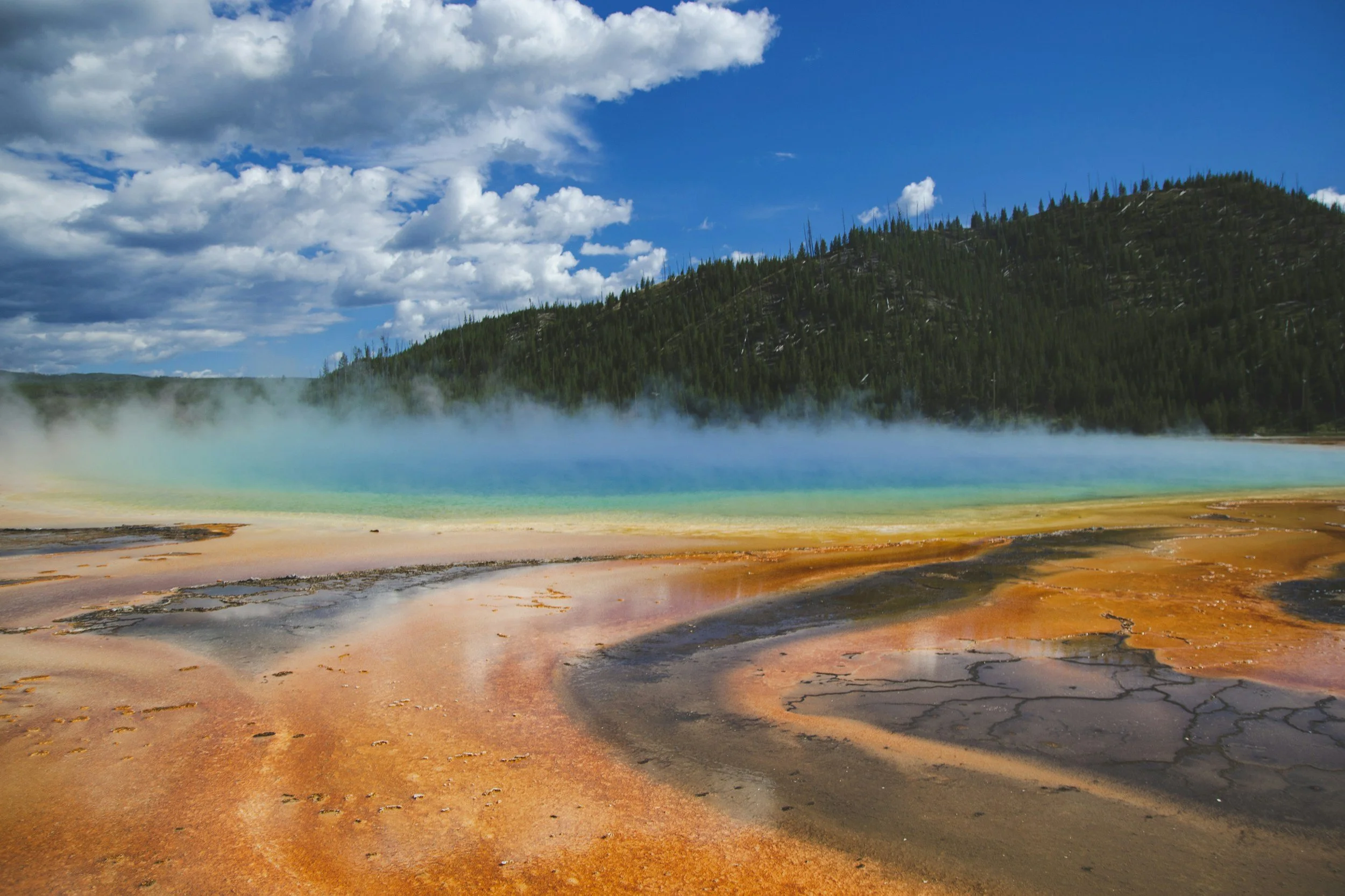
The Park Collection
From the dawn of time, humans have been explorers. We’re rooted in something timeless - the drive to discover what lies around the bend. Let’s explore together.
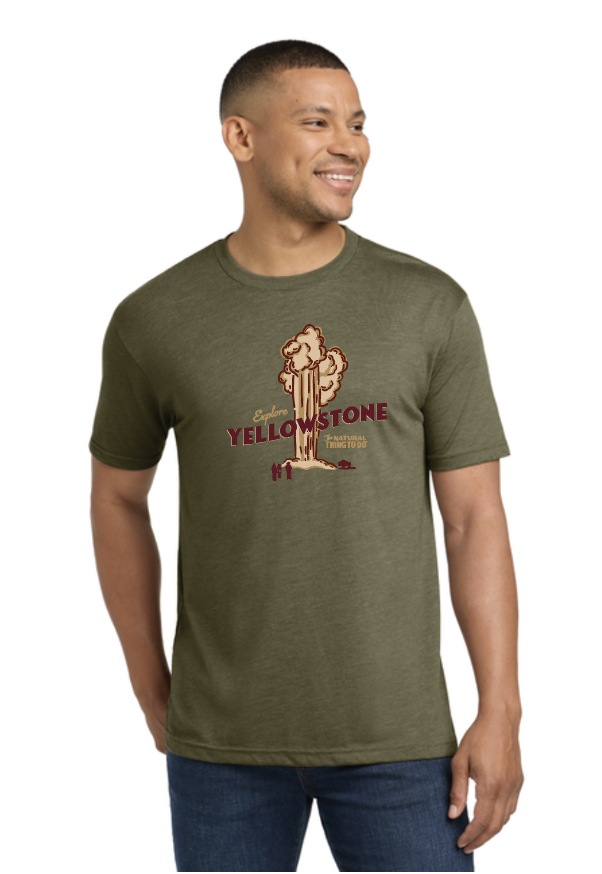
Yellowstone National Park - Old Faithful
For over 11,000 years, Indigenous peoples have journeyed through what we now call Yellowstone—seeking obsidian for tools, tracking game, and connecting spiritually with the land. These landscapes have long held profound meaning.
In the early 1800s, explorers like John Colter and Jim Bridger entered Yellowstone’s untamed land. Their reports of geysers and boiling rivers sounded like tall tales—until later expeditions proved them true.
The result: America’s first national park.

Yellowstone National Park - Falls
For over 11,000 years, Indigenous peoples have journeyed through what we now call Yellowstone—seeking obsidian for tools, tracking game, and connecting spiritually with the land. These landscapes have long held profound meaning.
In the early 1800s, explorers like John Colter and Jim Bridger entered Yellowstone’s untamed land. Their reports of geysers and boiling rivers sounded like tall tales—until later expeditions proved them true.
The result: America’s first national park.

Grand Canyon National Park
The Grand Canyon region holds one of the longest continuous records of human habitation in North America—over 12,000 years. The Havasupai, Hualapai, Hopi, Navajo (Diné), Zuni, Paiute, and Ancestral Puebloan peoples are among the primary Indigenous tribes connected to this land. Today, 11 federally recognized tribes maintain ties.
Spain, in 1540, was the first known European country to see the area. It was John Wesley Powell’s 19th-century Colorado River expeditions that captured national attention.
In 1919 Grand Canyon National Park was established and remains one of the world’s most inspiring landscapes.

Shenandoah National Park
For over 9,000 years, the Manahoac and Monacan peoples lived, farmed, and traded throughout the Blue Ridge and Shenandoah Valley.
Europeans began entering the region in the late 1600s; explorer John Lederer is often credited as the first to cross the Blue Ridge, and Governor Spotswood’s 1716 Golden Horseshoe
Expedition opened the valley to later Scotch-Irish and German settlers. Established in 1935, Shenandoah National Park now protects the Blue Ridge’s landscapes and its 105-mile Skyline Drive.
Sequoia & Kings Canyon Parks
Long before the parks were established, the Sierra Nevada was home to the Western Mono, Yokuts, Tubatulabal, and Paiute peoples, who moved seasonally through the giant sequoia groves—hunting, gathering plants, and tending the land through cultural burns.
In the 1850s, Hale Tharp became the first Euro-American to explore the Giant Forest, living in a hollowed sequoia called Tharp’s Log. Logging soon followed, but sequoia wood splintered easily, making it destructive and unprofitable.
By the 1870s, John Muir’s writings spurred efforts to protect these giants, leading to Sequoia National Park in 1890 and Kings Canyon in 1940.

Niagara Falls National Park
Niagara Falls has long been home to Indigenous peoples, including several Iroquoian-speaking nations who regarded the river and its waters as spiritually powerful.
The name Niagara is believed to derive from the Indigenous word Onguiaahra, meaning “the strait” or “the thunder waters.”
In 1683, French Franciscan Louis Hennepin recorded the first known written description of Niagara Falls. By the mid-19th century, the region had become a major tourist destination.
In 1895, the Adams Power Plant pioneered large-scale alternating-current hydroelectric generation, establishing Niagara Falls as a center of energy innovation.